
Why good problem reports matter (and how they help you)New Post


When something doesn’t behave the way you expect, the fastest way for me to fix it is a good problem report.
I know this can sound like unnecessary bureaucracy. It can feel a bit like:
have you filled out your TPS report?
I promise it isn’t that.
Powston makes a decision every five minutes. That is 288 independent decisions per day. Each one is based on prices, forecasts, battery state, load, and constraints at that exact moment.
When a report says something like:
- “It happened overnight”
- “This has happened before”
- “The battery didn’t discharge enough”
there is nothing concrete I can inspect. I cannot tell which decision you are referring to, or what you expected the system to do instead.
A good problem report answers one simple question:
Which interval do you think should have behaved differently, and how?
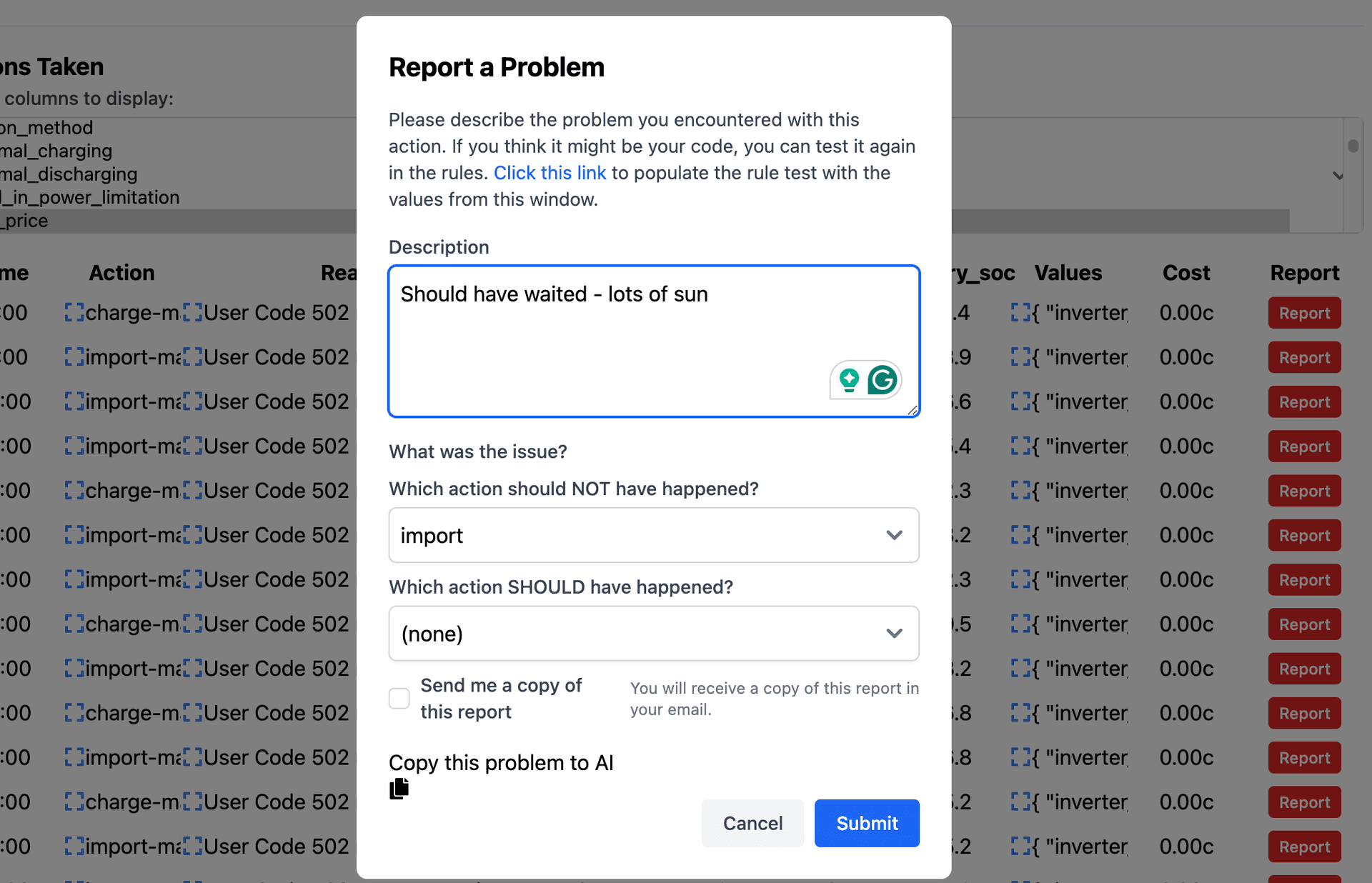
That is why the in-app bug report exists. It automatically captures:
- The exact 5-minute interval
- Prices and forecasts at that time
- Battery SOC and power flows
- The reason the system chose the action it did
With that information, I can do one of three useful things very quickly:
- Confirm the behaviour was intentional and explain it clearly
- Change the behaviour if the logic is wrong
- Improve the app messaging so the confusion doesn’t happen again
Emails with vague descriptions do not give me that leverage. The app does.
If you want to reason about or control behaviour at the interval level yourself, that is exactly what Hacker Mode is for. If you just want the system to work well and improve over time, detailed problem reports are how that happens.
They are not busywork. They are how the product gets better for everyone.
PS: We personally read every problem report. Replies may feel “GPT-like” or a little nerdy. That’s to help translate code fixes and explain complex 5-minute decisions clearly, and we tend to think in intervals and edge cases. A human still reviews every report, and they directly feed into behaviour changes or better in-app explanations. Eventually, we want to expose the support model in the app, but for now we filter the responses to ensure they are accurate.