
When “compliant” isn’t the same as “ready”: a real-world solar and battery story


A customer recently came to us with a new solar and battery system that, on paper, looked complete.
- The installer had finished the job.
- The paperwork was lodged.
- And the distribution network, Energex, had marked the connection as accepted.
Yet the customer had a problem: they could not access the very benefits the system was sold on.
What the installer said
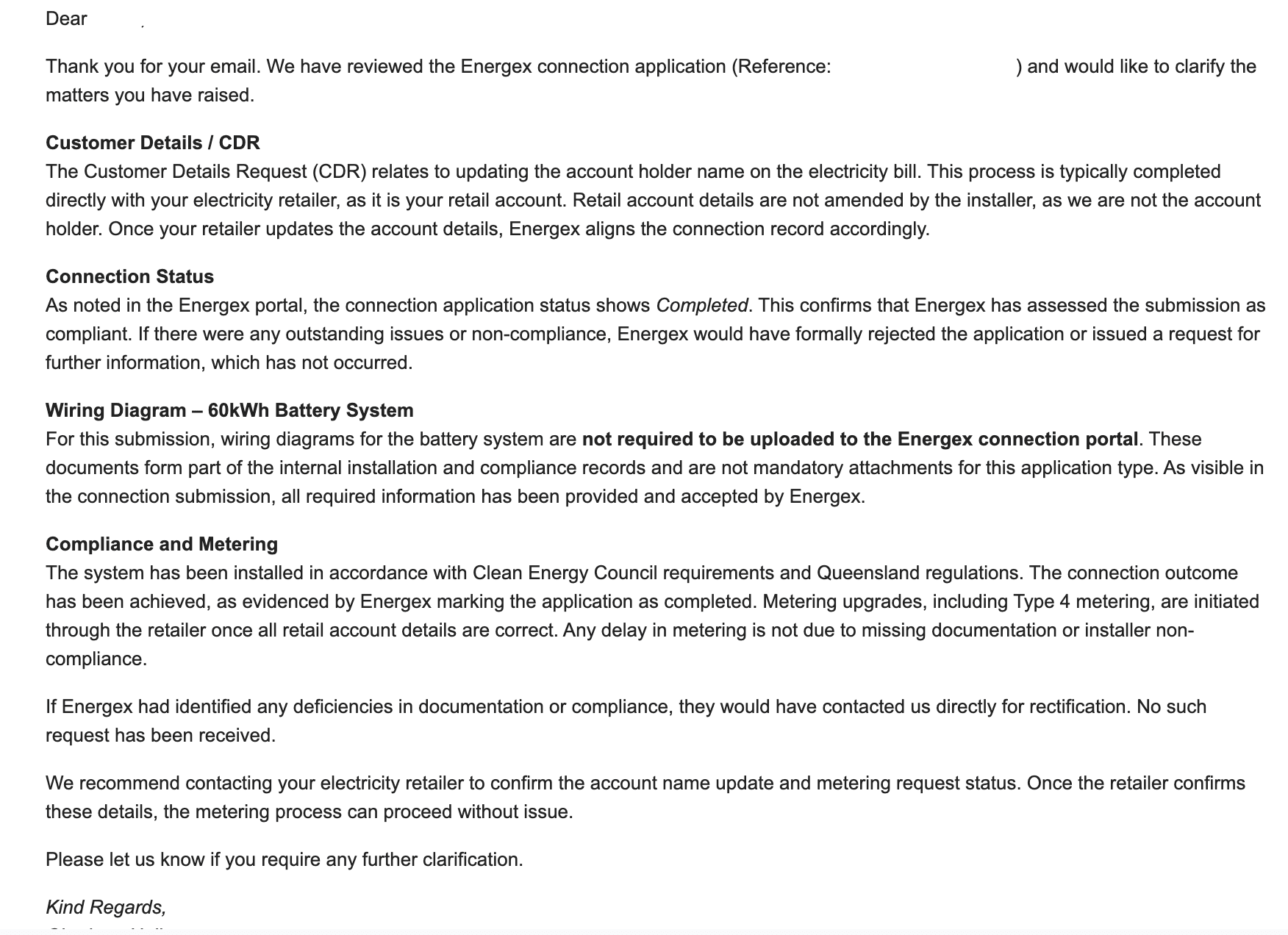
When asked about the missing smart meter, the installer was clear and confident:
The system was installed in accordance with Queensland regulations
- All Clean Energy Council requirements had been met
- Energex had accepted the connection and marked it complete
- Metering upgrades were a retailer matter, not an installer issue
From an electrical compliance point of view, that statement was correct.
Energex acceptance confirms that:
- the installation is electrically safe
- the system meets network connection requirements
- the required documentation has been provided
But that wasn’t the customer’s complaint.
What the customer expected
The customer hadn’t just bought “a compliant system”.
They had been sold a battery on the basis of:
- time-of-use optimisation
- export value
- future VPP participation
These benefits all rely on interval (Type 4) metering.
Without a smart meter:
- time-of-use tariffs cannot settle correctly
- exports cannot be measured properly
- VPP participation is not possible
So while the system was compliant, it was not ready for what the customer believed they were buying.
Where government rebates raise the bar
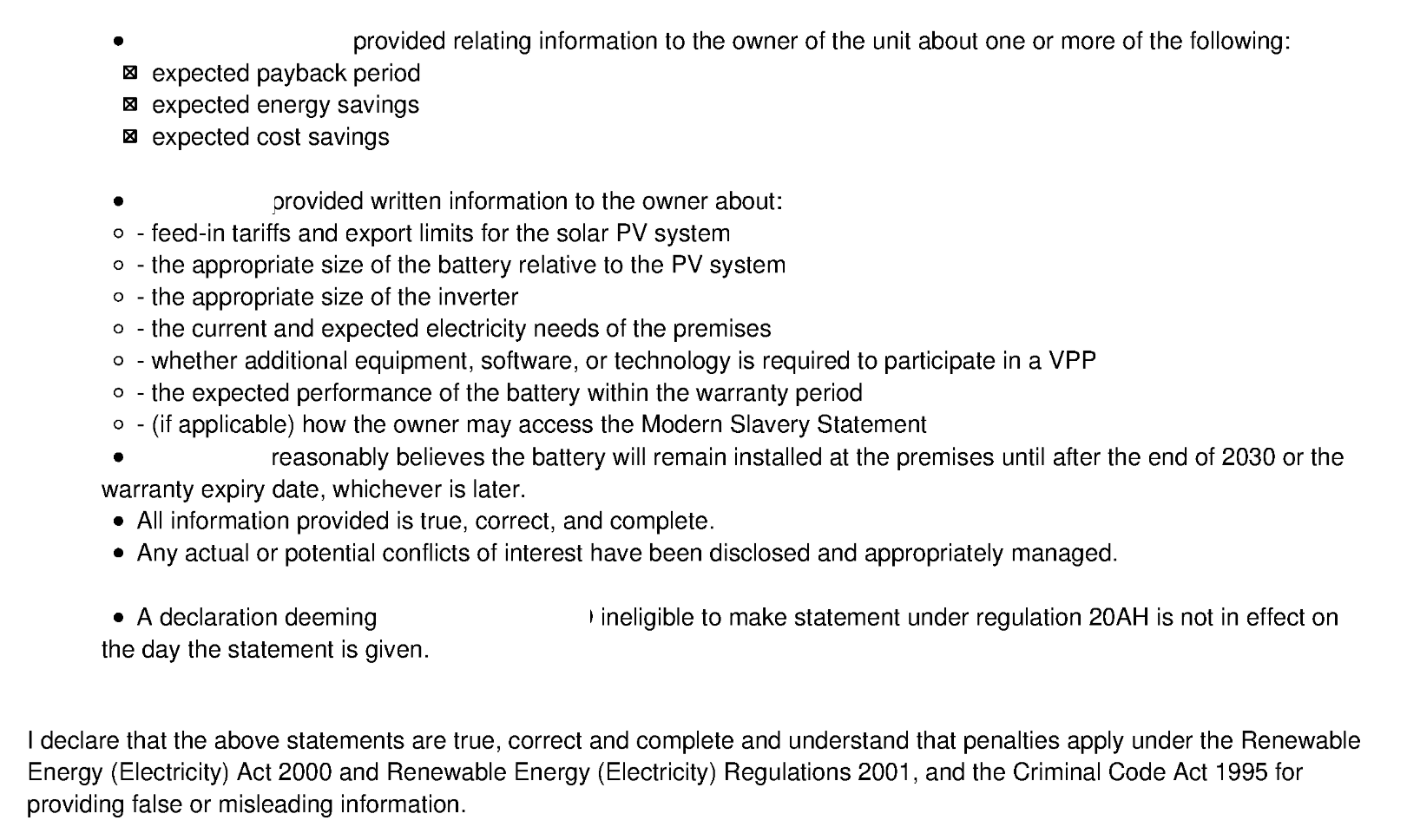
This distinction matters even more when government rebates are involved. As part of the battery rebate process, installers and sellers are required to make formal declarations confirming that customers were given accurate information about savings, tariffs, exports, and VPP participation requirements. These declarations, submitted through platforms like Formbay, are made under legislation with penalties for false or misleading information. While the rebate does not require the installer to order a smart meter, it does require that customers are properly informed about any additional technology needed to achieve the outcomes being promoted. When VPP capability or ToU optimisation is part of the value proposition, interval (Type 4) metering is no longer incidental — it is a disclosed dependency.
Where the disconnect happens
This issue sits at the intersection of three different systems:
- Electrical compliance
- Covers safety, wiring, standards, and network approval.
- Network connection
- Managed by the DNSP. Acceptance means the system can connect safely.
- Market and metering
- Managed by retailers and metering coordinators under national market rules.
These systems are separate by design.
A distribution network accepting a connection does not mean:
- a smart meter has been ordered
- interval data is available
- the system is market-ready
That step only happens once the retailer initiates a meter upgrade.
Why installer choice matters
Here’s the key lesson from this situation:
There is a difference between delivering a system that is electrically compliant and one that is functionally ready for time-of-use savings and VPP participation.
Some installers:
- focus strictly on what the regulations require
- stop at electrical and network compliance
- correctly state that metering is “someone else’s job”
Others:
- explain upfront that a Type 4 meter is required
- help customers understand who orders it
- set expectations about timelines and dependencies
Neither approach is illegal.
But only one avoids confusion and frustration.
The takeaway for customers
If you’re installing solar or a battery:
- Ask whether a Type 4 smart meter is required
- Ask who will help you follow that up
- Ask whether the system is being sold as compliant or VPP-ready
A compliant system can be perfectly safe and still fall short of the benefits you were expecting.
The difference often comes down to how well your installer explains what happens after the install is complete.